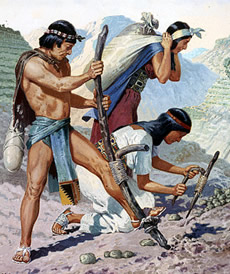
MYP3 The MITA and OBRAJES in Colonial America TITLE: The MITA and OBRAJES in Colonial America OBJECTIVE: To understand the (un) equal labor relationships in Spanish America Define the MITA system in the Spanish Colonial Period? What were THE MITAS? What was their objective? How did they operate? Define the OBRAJE system in the Spanish Colonial Period? What were THE OBRAJES? What was their objective? How did they operate? What city was famous for its fine textiles? Useful websites: MITAS: http://coloniallimapolitics. blogs.wm.edu/2014/10/22/hello- world/ OBRAJES: http://epicworldhistory. blogspot.com/2012/05/obrajes- in-colonial-latin-america.html
PD2 HOMEWORK Restructuring at Southmead College (a) If someone is denoted ( to lower someone or something in rank or position) to classroom teacher, it means that he/she had previously hold the position of chairperson or head of an area, with administrative tasks. Middle managers at Southmead College are all those individuals who were heads of areas, held a relatively high ranking in the hierarchy structure (depending on how tall or flat the organization was), and had teachers (subordinates) reporting to them. These middle managers were held responsible for the teachers beneath them, and accountable for the whole's area performance. (b) It might have been a good decision if one considers that it cut costs and saved money, with minimal redundancies. Hopefully, the funds generated from the cost cutting exercise should finance training and some equipment improvement (in that order and priority). Flattening the structure should allow teachers to empower themselves in differe...
PD2 Question 2.2.2 Ferrari (b) Skills training is important at Ferrari because they produce expensive tailored made cars. As with an expensive suit, no errors are allowed, as the fabric used is one of its kind and cannot be replaced easily. A demanding client won't wait. On top of all the benefits the book explains in page 120, one could also focus on the cost of not providing any training at all, and how this scenario might translate into 1) more mistakes in the manufacturing process, lower quality in the final product, and most probably - more complaints (or returns). These all translate into higher costs of production and extended times of delivery. None of which the company or the customer want to deal with. In the end, investing in training will be less expensive than fixing errors. (c) Centralization is more effective with low-skilled workers in mass produced goods. This is not the case at Ferrari, where the final product is a piece of art that needs highly sk...
Comments
Post a Comment